Pillar Strength from Core
Performance: The Revolutionary Workout Program to Transform Your Body and Your
Life The following is an excerpt from Core
Performance: The Revolutionary Workout Program to Transform Your Body and Your
Life by Mark Verstegen and Pete Williams
Published by
Rodale Press Copyright © 2004 Mark
Verstegen
The Foundation: Building
Your Pillar of Strength
We have a tendency to think of movement as
starting from the limbs. If we reach out to grab something or step forward, we
think of those motions as originating with the end result -- we've reached out;
therefore, we've used our arms. We've stepped forward, so we've worked our
legs. Uncountable exercise programs promise bigger arms or sexier legs as a
primary benefit.
Movement, however, starts from the very
center of the body, the core area of the torso. Amputees still can function and
have fulfilling lives because their cores remain intact. Frost-bite begins at
the fingers and toes, areas farthest from the core, because the body wants to
protect what's most important and concentrates its lifesaving heat around the
vital organs at the center of the body.
That's why we refer to the torso as the
pillar -- it's the structural center of movement and life. The way we maintain
that pillar and its alignment and function directly correlate to the health of
our organs and the rest of our bodies. Everything is interrelated.
Pillar strength, thus, is the
foundation of movement. More specifically, it consists of core, hip, and
shoulder stability. Those three areas give us a center axis from which to move.
If you think of the body as a wheel, the pillar is the hub, and the limbs, the
spokes.
We want to have the hub perfectly aligned so
we can draw energy from it and effectively transfer energy throughout the body.
It's impossible to move the limbs efficiently and with force if they're not
attached to something solid and stable.
The better you can transfer energy through
your body, the more efficiently you will move, and the less wear and tear there
will be. If you have good pillar strength and take a step, force will pass
evenly through your foot, calf, and hip -- right up the pillar and through the
top of your head.
If you lack pillar strength, specifically
hip stability, the energy "leaks out" at the hip, and the body must compensate.
More pressure is placed down toward the knees and up toward the lower back,
which over time can cause degenerative problems.
Parents are always telling their children to
sit or stand up straight. There's a reason for that. Without pillar strength,
without what I call perfect posture, you will significantly increase the
potential for injury in a chain that starts with your lower back, descends all
the way to your knees and ankles, and rises up to your shoulders and elbows.
Everything in your body is connected and
related through this pillar of strength. Your shoulders and spine are related
to the core and gluteus maximus (or glutes), and they're interwoven in cross
patterns that need to be tuned for maximum efficiency.
Think of a rubber band wrapped around your
body. If one end is not attached, you will not develop enough tension. The band
is fine, but unless both ends are attached solidly, there's no way to store,
release, and transfer energy throughout your body.
For every action, there's a reaction. If I
fire and move one muscle, it causes another muscle to react. The muscles
stretch and snap back. This dynamic, multiplanar transfer of energy from front
to back, side to side, and top to bottom creates fluid movement for people with
the greatest pillar strength.
Marion Jones, the world-class sprinter, has
tremendous pillar strength. As she sprints 100 meters, there's a smooth
transfer of energy through her stable pillar that allows her to run at such
great speed. There's perfect harmony between coordination, muscular strength,
stability, balance, elasticity, and flexibility.
All movement starts from a remarkable muscle
called the transverse abdominis. Think of the TA as nature's weight
belt. It originates from the lower spine and wraps around and attaches to the
ribs, abdominals, and pelvis. When we draw the belly button in toward the spine
and up toward the ribs, we're essentially tightening a belt, ensuring the
protection of the pelvis and lower back. Your natural weight belt stabilizes
the pelvis and supports the torso.
Whenever movement begins, the TA is the
first muscle that fires -- or, at least, it should be. For many people, that
ability is lost over time on account of injuries or sedentary lifestyles. We
spend so much time in front of computers and televisions that we develop bad
posture. Injuries are a result and exacerbate the problem further.
Workers at home-improvement stores are
required to wear snug belts around their backs and abdominals when lifting or
moving objects for safety reasons. They need to wear such devices because their
bodies no longer activate their natural weight belts.
If we can learn (or relearn) how to activate
the TA, we can rely on nature's weight belt and not wear additional support.
We'll be able to stabilize the pelvis so that the leg and torso muscles can
turn to it for support. That, in turn, prevents back problems. The body will be
able to transfer force efficiently through the muscles rather than through the
back and joints.
You'll relearn how to activate your TA early
in this program, and though it's an easy process, you'll have to make a
conscious effort at the beginning. Soon you'll find that it's second nature,
and you will no longer have to think about it.
Now that you are conscious of the role of
the transverse abdominis in core stability, we need to address your shoulders,
another key element of perfect posture. Think of a skeleton hanging in a
classroom. Its shoulders are naturally hanging back and down, giving it perfect
posture and alignment.
Unfortunately, most people have a tendency
to slump forward, with their shoulder blades sliding forward and up. If you
spend much of your day in front of a computer, as many working Americans do,
you're probably slumping over, even if you're not conscious of it. Unless you
make some changes, you're going to end up hunched over like so many of our
elderly friends who, sadly, never were exposed to a program like this years
ago, when they most needed it.
I want you to keep your shoulder blades
pulled back and down toward your waist, as if thrusting your chest up. You'll
hear me reiterate it ("SBD") during the instructions for many exercises. It's
important to keep your shoulders in this position throughout the program and
throughout life.
Another key concept to understand about
pillar strength is the fascial planes that wrap around the body. Think
of these planes as the ropes that tie your muscles together. They ultimately
tie a glute into your opposite shoulder and your hip muscles to your lower
back.
Let's say you were standing on an
observation deck looking directly down upon golfer Tiger Woods at the tee. As
his club comes back, his shoulders turn, and his lower body remains stable, if
only for a moment. At that instant, from your vantage point, his body would
form the letter X. He's able to disassociate his shoulders and hips as
he moves across the transverse plane to generate incredible power. Why? Because
he's developed incredible mobility and pillar strength.
Core Performance: The Revolutionary
Workout Program to Transform Your Body and Your Life
by Mark Verstegen
and Pete Williams
© 2004 by Mark Verstegen. Permission granted by
Rodale, Inc., Emmaus, PA 18098.
More About The Book
At your core, there's an incredible athlete.
Lean, yet powerful. Strong, but still flexible. World-class trainer Mark
Verstegen shows you how to use your core to transform your body and your life,
turn back the clock, speed up your metabolism, trim your waistline, build
muscle, and gain boundless energy. More than a workout routine, Verstegen's
12-week, comprehensive program reveals the athlete that's always been inside
you.
The Core Program Shows You:
- How to develop balanced fitness --
strength, muscle mass, flexibility, power, and endurance -- without
overemphasizing or shortchanging any component.
- How to recover from workouts so
you get leaner and stronger when everyone else is just getting tired.
- How to eat the right foods to get
the body you want and the energy to have more fun with it.
You probably look at elite athletes and
think they have something you don't. Certainly, they can do things the rest of
us can't, but they have the same muscles and require the same food. They have
to strike a balance between exercise and recovery, or they'll wear down. They
need to get leaner and stronger without compromising their endurance or
flexibility. And if they don't train intelligently and cautiously, they'll get
hurt. Same as you.
Of course, athletes have hours a day to
train, and you're probably lucky if you can squeeze in 60 minutes. So it's no
wonder that you focus on one or two types of exercise -- aerobics,
bodybuilding, Pilates, yoga, kickboxing, or Tae-Bo -- and assume you don't have
time to work on all the other aspects of fitness.
Core Performance is the first program
that delivers strength and muscle mass, endurance and a lean body, balance and
flexibility, athletic quickness and power -- all in less than an hour a day.
How? By giving you a personal coach who has worked with some of the most famous
and successful athletes in the world today.
Mark Verstegen, owner of Athletes'
Performance in Tempe, Arizona, and Carson, California, has trained the best of
the best: Nomar Garciaparra. Mia Hamm. Roberto Alomar. Mary Pierce. When
Verstegen trains an athlete, millions of dollars in salary and signing bonuses
are at stake. Bottom line: If he didn't deliver, he'd be out of business. And
he's busier than ever.
What works for these gifted athletes will
work for you. Sure, you can't do as much exercise as they do, but you don't
need to. It takes less than an hour a day to build the type of fitness that
improves your life in almost every way. You can straighten your posture,
eliminate aches and pains, sleep better, and approach everything you do with
more vigor and a better attitude.
Sure, you will get bigger muscles, a tighter
waist, and more strength and power. But the biggest benefits come from the
inside. The intense focus on the muscles of your core -- abdominals, lower
back, hips, and thighs -- will help you stand taller and prevent the back pain
from which most people eventually suffer. The detailed nutrition section
guarantees that you'll feed your muscles, starve your fat, and get boundless
energy when you need it most. And the attention you'll pay to recovery from
your workouts will give you a straight path to the results you want.
The potential is within you, and the power
to unleash that potential is within Core Performance.
Author
Mark Verstegen directs a
25-person team of performance specialists and nutritionists to train some of
the biggest names in sports, including soccer star Mia Hamm; baseball's Nomar
Garciaparra, Roberto Alomar, and Vernon Wells; WTA tennis players Meghann
Shaughnessy and Mary Pierce; golfers Jim Carter and Billy Mayfair; NFL veteran
Trace Armstrong; hockey goalie Nikolai Khabibulin; and NBA forward Rick Fox. He
serves as director of performance for the NFL Players Association, is an
advisor to Adidas, and serves as a consultant to numerous athletic governing
bodies, including the U.S. Tennis Association. Verstegen and his wife, Amy, a
former Washington State University soccer player, live in Scottsdale, Arizona.
Pete Williams is a contributing
writer to Street & Smith's SportsBusiness Journal and USA Today
Sports Weekly. He has written about fitness and performance for numerous
publications and is the author of two books on the sports-memorabilia business:
Card Sharks and Sports Memorabilia for Dummies. A graduate of the
University of Virginia, he lives in Florida with his wife, Suzy, and son, Luke.
Reviews
"This is the best decision
I have ever made with regard to improving and educating myself as an athlete. I
just wish I had made it sooner."
--Mia Hamm, Olympic and world-champion
soccer player
"This program has transformed me from a
skinny college baseball player with little power into one of the
best-conditioned players in Major League Baseball."
--Nomar Garciaparra,
professional baseball player |
 Fuel Your Body
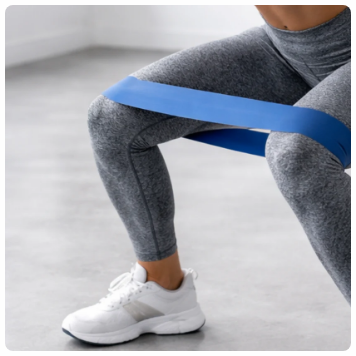 Get Fitter
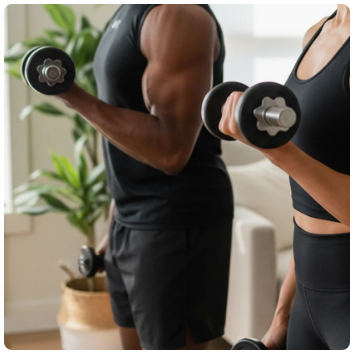 Get Stronger
 Then Go For It