
What's The 4-1-1 on Fiber?When I was very young, my mother implored me to eat my bran flakes or else I wouldn't get enough fiber. I don't know about you, but from the age of 4 on, anything my mother told me to do automatically seemed worth avoiding at all costs. Plus the word "bran" kind of sounds like "bland," so it's like my mind was already telling me I was going to dislike it even before I tried it. But in hindsight, maybe my mother knew what she was talking about. Fiber is essential to maintaining a healthy digestive system, and it also has a positive effect on your heart, cholesterol levels, and blood sugar.
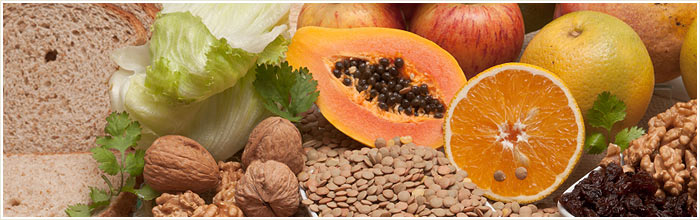
What is fiber?Fiber is a complex carbohydrate found in fruit, vegetables, whole grains, and legumes. In fact, it's so complex the body can't digest it. Note that I said whole grains. When it comes to grains, you'll find the fiber in the outer shell, or bran (there's that word again). The problem we face in getting fiber from bread, pasta, rice, or cereal—the processed foods many of us know and love—is that they're often made from refined grains that have been stripped of their bran, which means they contain very little fiber. And just because a product says "wheat" somewhere on the bag or box doesn't mean it has fiber in it. (Technically, Wonder® Bread is made from wheat.) If you want to make sure you're getting your whole grains, and the fiber that comes along with them, you need to verify that the ingredients actually list "whole wheat" or another kind of whole grain. And even then, you should check the fiber listing on the nutrition facts panel to see how much you're getting. What does fiber do?
Soluble fiber dissolves in water, taking on a gel-like consistency in the stomach, helping to slow digestion and lower blood sugar levels by slowing the rate at which sugar is released into the blood. Soluble fiber also helps to regulate cholesterol by binding with fatty acids and helping them to be eliminated from your system. Fiber has been shown to reduce the risk of coronary artery (heart) disease and type 2 diabetes. Here's a chart that breaks down how much fiber the USDA recommends adults consume daily to maintain a healthy diet:
But I don't like the way fiber-rich foods taste!We get it, and food manufacturers do too—they realize consumers have gotten increasingly savvy about what goes into their food (and subsequently, into their bodies), and are offering more and more whole-grain versions of many of their popular brands of products. Taste preference, especially for foods made from refined flour, has a great deal to do with what you're used to. Making a commitment to buying whole-grain products requires your taste buds to adapt, but learning to prepare whole-grain foods in a way that's appealing and combining them with other other nutritious foods can result in healthy meals that are also good to eat. It's important to realize you don't need to change everything about the way you eat overnight. Small changes can add up. If you don't like whole-grain bread, start with adding more apples or beans to your diet. Have fun and experiment. Don't get frustrated because you don't like eating bran muffins and proclaim that fiber isn't worth the trouble. There are always solutions to a problem if you're patient enough to find them. One great resource for gourmet, high-fiber recipes is The High-Fiber Cookbook by Bryanna Clark Grogan. Supplements, you say?If you change your diet and you're still not getting all the fiber you need, supplements are a great way to boost your fiber intake. One main drawback of getting your fiber as a supplement is that you can deprive your body of the other vitamins and minerals you'd be consuming along with the fiber you get in natural food form. If a food is high in fiber, it's probably high in many other things that are good for you too, and you end up killing eight essential birds (or vitamins) with one stone (or bowl of lentil soup). Keeping this in mind, let's explore four popular forms of fiber supplements:
Whether you do it because Beachbody suggested it, or because you think it's about time you finally heeded some of your mother's advice, it's not a bad idea to figure out a way to get the recommended amount of fiber in your diet. It may help you achieve a smaller waistline, while also helping to stave off a myriad of dangerous diseases. That's gotta be worth a bran muffin or two . . . right? References and Further Reading:
|
|||||||||||
Click here to learn more about BODi Coach Rich Dafter. |
| top | |||||||
|
|||||||
 There are two types of
fiber: insoluble and soluble. Insoluble fiber goes through your system "as is"
and helps to regulate bowel movements. As insoluble fiber moves through the
digestive tract and colon, it carries other things along with it, which bulks
up your stool, making it easier for it to pass. If one of your goals is weight
loss, consuming more insoluble fiber is helpful, because it helps you eliminate
more waste from your body.
There are two types of
fiber: insoluble and soluble. Insoluble fiber goes through your system "as is"
and helps to regulate bowel movements. As insoluble fiber moves through the
digestive tract and colon, it carries other things along with it, which bulks
up your stool, making it easier for it to pass. If one of your goals is weight
loss, consuming more insoluble fiber is helpful, because it helps you eliminate
more waste from your body. Apple pectin.
 Wheat germ.