The Simplest Weight Loss Tips No One
FollowsBy Will Brink - from Tom
Venuto's Fitness Renaissance
I have a Cheez-It problem. You’re not
listening, I really have a Cheez-It problem! I have never met a Cheez-It I
didn’t like.* Some people can’t resist chocolate or ice cream, some
people it’s pizza or some other food or sweet. While I enjoy all of those
foods on occasion, Cheez-It’s are the food equivalent of crack cocaine for
me.
It takes all my willpower to pass up the isle
where the Cheez-It’s reside on the shelves at my local grocery store. My
ever-loving girl friend Kimberly rolls her eyes at me in sheer disgust when she
sees how weak I am to the power of these little crackers, which draw me in like
a cheese-flavored black hole. “But you have given advice on nutrition to
millions of people Will, how could you - of all people - be so weak willed
about some little cheese flavored cracker?” she says. I hang my head in
shame and avoid eye contact with her for the rest of the day.
The point of this introduction is to point out we
all have our weaknesses and we are all human - even me. I find Cheez-It’s
to be cheese flavored morphine!
This small problem got me to thinking. If there is
one thing I have learned after all these years of doing nutritional research,
writing countless articles on the topic of nutrition, and working directly with
people on their diets, it’s this: it’s rarely one single thing a
person does that is sabotaging their efforts to lose fat and or gain muscle,
but a bunch of little things that have an accumulated effect.
There are some amazingly simple behaviors and
strategies we can all add to our nutritional goals and workout plans that will
have a positive effect. Using my own addiction to Cheez-Its as the primary
example, I am going to cover a few of these surprisingly simple yet effective
strategies. A few issues to keep in mind:
(1) Taken alone, these simple tactics will have
very little effect. Used alone without any other dietary changes and an
exercise plan, these strategies won’t amount to much. However, as I
mentioned, it’s often many minor mistakes adding up to a lack of results
for people, and taken in that context, these are some simple mistakes that can
be avoided, hopefully resulting in an accumulated effect in a positive
direction.
(2) I didn’t invent any of these tips. They
are some of the oldest and simplest tips you will ever read. I don’t even
know who first came up with them, and I bet most people have seen these
strategies in other places, such as various diet books, articles, or web sites.
I do however think that they may be so old and so simple that most people with
the best of intentions about their nutrition and exercise plan, don’t
follow these simple concepts.
These tips are more about behavior changes and
psychology then nutritional science, study results, or research. I have written
many articles based on the later topics, but this is not one of those. If you
are looking for more in-depth science oriented information about nutrition,
supplements, and fat loss or gaining muscle, I suggest reading my ebooks on the
topic and the many free articles on my web site.
Tip #1: never ever go food shopping
hungry
This is one of the most effective strategies I
know of to avoid unwanted junk and various snacks from finding their way into
your shopping cart, which ends up in your home, which ends up on your butt!
Make sure to eat something before you go food
shopping and you will be able to resist the junk that often finds its way into
your cart. If I go food shopping without a good meal in my stomach, I often
come home with a family sized box of Cheez-It’s and feel like sh*& for
days after eating the entire box!
Human hunger and appetite are regulated by a
phenomenally complicated set of overlapping feedback networks, involving a long
list of hormones, psychological factors, and others way beyond the scope of
this article. Suffice to say, we often make snap decisions and impulse
purchases with certain foods due to one or more of these feedback loops being
activated due to an empty stomach while we shop.
Translated, your “willpower” to resist
junk foods will be much greater if you eat something healthy at least 20-30
minutes before you go food shopping. You can either plan your meal schedule so
that one meal is eaten before you go shopping, or have a snack (at least 20-30
minutes before shopping) which will have the desired effects.
A yogurt with some flax oil mixed in is a good
choice, as is a half cup of cottage cheese and a handful of walnuts or some
other nut. A protein shake or MRP will suffice, but solid food tends to be more
satiating.
Tip # 2: never keep snack foods in the
house
This tip is a logical extension of tip number one.
If it does not make it into your cart at the food store, it’s not in your
house. However, many people use excuses like, “I have snack foods for the
kids” or my spouse keeps a box of Oreo cookies in the kitchen
cupboard” as reasons they can’t avoid the snacks that sneak into
their diets and sabotage their efforts.
Many of the foods we eat that we know we should
not be eating are based on an impulse. Impulse control goes a long way here but
no one will deny it’s far harder to resist that impulse if your favorite
junk food is under your nose. That’s human nature. When I have an impulse
for some Cheez-its, I won’t resist it well if it’s only a few steps
to the kitchen vs. having to get in the car to go get a box.
The former I can’t resist, the latter I can.
Remember an impulse is defined as ?a sudden desire, urge, inclination.? That
means it’s short lived and will go away given sufficient time, so
it’s a matter of not having foods in your house that allow you to act on
the impulse while it lasts.
As for the excuse of the spouse, kids, etc. That
is more an issue between your kids and or your spouse. Should the kids be
eating that stuff anyway? No! I had a client tell me one day, I keep eating hot
dogs - cause I keep them in the house for the kids.? I said “so
you’re Ok with feeding your kids foods you know to be unhealthy for you
and them?” She stopped feeding her family hot dogs shortly after.
...Bottom line here is, those foods should be
occasional treats for both kids and adults, not staple foods that can be found
in your kitchen. It’s more an issue of teaching the kids good dietary
habits young so they don’t end up overweight unhealthy adults.
As for the spouse, I like to have some chips in
the house, which I can resist without a problem. That is, unlike the Cheez-its,
I can walk past the chips without having to eat them all. I can regulate myself
with them. However, Kimberly can’t. Chips are to her what Cheez-its are to
me, so I make it a rule not to keep chips in the house.
Point being, your spouse needs to support your
efforts by making some small sacrifices. If you were an alcoholic trying to
avoid alcohol, you would (or at least should!) expect your significant other to
not keep booze in the house. If they wont support your efforts here, then
relationship counseling is in order or a long talk, and I can’t help you
there; sorry!
Tip # 3: eat off of smaller plates
The first two tips are common sense, this one is
less so. However, I find it helps, albeit not to a great extent. Again, how
much we eat is based on many variables. One of them is the visual cues we get
looking at the food we are about to eat. We are extremely visually oriented
creatures and part of deciding how large an object is must be compared to other
objects, in this case, the food we put on the plate in comparison to the size
of the plate we put the food on. Some of you may remember this little visual
test from grade school.
Looking at these two horizontal lines below, which
one is longer?

Answer: both lines are identical in length. As you
can see, the bottom "plate" looks longer then top "plate", yet they are the
same length. It’s a visual illusion that shows how our brains are set up
to interpret certain visual cues. It is my experience that people will put less
food on their plate if they eat from smaller plates as a smaller plate full of
food looks like much more to eat then a large plate with the same amount of
food on it.
I know for myself I tend to put 2 slices of pizza
on a small plate and three on a large plate! Now this is only one minor cue we
have to self regulating how much food we eat, and other feedback loops (i.e.,
hormonal, psychological, etc.) can kick in and easily offset this strategy.
For example, you could simply come back for a
second helping using the smaller plates. However, it’s my hunch (and
it’s only a hunch as research is lacking here) that over the course of say
a month, a person may end up taking in fewer total calories using this strategy
as has been my (admittedly anecdotal) experience with both myself and the many
people I have given advice to over the years.
Again, as already mentioned, taken alone, this
strategy will probably have no effects on your efforts to lose fat if there is
not a specific diet and exercise plan involved in the overall equation. It is
however one simple small change that may improve compliancy to your efforts. It
would be interesting to see a study on this, but whatever effects it may have,
would be subtle and fairly small I suspect. Even so, over the course of a year
say, it may help.
Tip #4: Know Thy Self
Lesson here is, we are all human and we all have
our weaknesses. Trick is to know your weakness and develop strategies for
coping with them. How well do you know yourself? That is, do you know what
cues/triggers tend to set you off? Have you examined that issue for yourself?
It’s essential to recognized the cues that sabotage your efforts. We all
have them. Find yours and take steps to avoid them where possible.
For example, try making a list outlining the
things you know tend to set you off and how you react to the, then add a column
for how you could deal with it. For example you might write "talking to my
crazy mother makes me anxious and I eat things I shouldn’t immediately
after the phone conversation" which would be followed by a suggestion of steps
to change it, such as "always eat a meal right before talking to mom" and "only
take calls from mom when I am ready and able to deal with her" and "go for a
walk immediately after talking to mom to distress and give me time to get over
impulse to eat junk" and so on.
Develop coping strategies to your known triggers.
I know for example going food shopping on an empty stomach means I will most
probably end up with a large box of Cheez-its in my house. I have also found if
I go shopping irritated over something I will buy more foods I don’t need
as food is one of many ways we self medicate looking for some comfort. Hence
the term “comfort foods,” which is commonly chocolate, ice cream, and
so on.
Learn to identify when it’s happening
Learn what your hot buttons are that lead to a
negative behavior
Develop strategies for coping with it.
How do you go about doing that? As entire books
have been written on that topic, my advice will fall short here. That journey
is also highly individual. For some it?s working with a therapist or behavioral
specialist, for some it?s reading a few good self-help type books, and for some
it?s activities such as meditation, joining support groups, and others. It?s
also a life long journey.
Conclusion
The purpose of this article is not as much to
supply tips for success in your fat loss endeavors but to actually remind
people of what is stated in the intro to this article: most people fail in
their fat loss/diet goals not due to a single mistake they are making (with
exceptions) but many small events that have an accumulated effect that
sabotages their efforts. If the tips in this article help, all the better.
Some people are amazed how many extra calories
slip into their diet from snack foods that they are not accounting for, or the
fact they tend to take the elevator when they could take the stairs, and so on.
99 out of 100 times the person that says, "I have tried everything and nothing
works" actually translates into, "I have not stayed on any one plan long enough
for it to have an effect and sabotaged it with small unaccounted for negative
habits and behaviors." Now, if I can just get the funding for that adult
Cheez-it rehab center I want to have built.
* Cheez-It's are a cheese flavored cracker made by
Sunshine foods and can be found on the shelves of any major food store in the
US.
About the Author - William D. Brink
Will Brink is a columnist, contributing
consultant, and writer for various health/fitness, medical, and bodybuilding
publications. His articles relating to nutrition, supplements, weight loss,
exercise and medicine can be found in such publications as Lets Live, Muscle
Media 2000, MuscleMag International, The Life Extension Magazine, Muscle n
Fitness, Inside Karate, Exercise For Men Only, Body International, Power,
Oxygen, Women's World and The Townsend Letter For Doctors. He is also the
author of Priming The Anabolic Environment and Weight Loss Nutrients Revealed.
He is the Consulting Sports Nutrition Editor and a monthly columnist for
Physical magazine and an Editor at Large for Power magazine. Will graduated
from Harvard University with a concentration in the natural sciences, and is a
consultant to major supplement, dairy, and pharmaceutical companies.
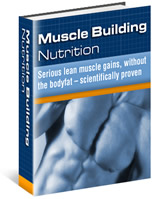 If you’d like to see
an independent expert’s review of popular bodybuilding and muscle-mass
building supplements, and you'd like to learn which one's really work and which
ones are complete hype, I highly recommend Will Brink’s newest e-book,
Muscle Building Nutrition. If you’d like to see
an independent expert’s review of popular bodybuilding and muscle-mass
building supplements, and you'd like to learn which one's really work and which
ones are complete hype, I highly recommend Will Brink’s newest e-book,
Muscle Building Nutrition.
Like myself, Will is an independent bodybuilding
& fitness writer/researcher who is NOT affiliated with any supplement
company. What’s more, Will is a stickler for the facts and for the
unbiased reporting of research.
Note: Will’s newest e-book is a great
companion guide to other diet programs (such as
Burn the Fat, Feed the Muscle, Body for Life, etc), and the
training section by world renowned Strength coach Charles Poliquin is simply
priceless. Click here to find out more:
www.musclebuildingnutrition.com
PS. Muscle building nutrition is a weight (muscle)
gaining program. If you are interested in honest reviews of weight loss and fat
loss supplements (like thermogenics, Ephedrine, Carnitine, Chromium, Guggul,
Keto-7, etc), you should check out Will’s other e-book, “Diet
Supplements Revealed”:
www.aboutsupplements.com
About Tom Venuto

Tom Venuto is a bodybuilder, gym owner,
freelance writer, success coach and author of "Burn the Fat, Feed The Muscle"
(BFFM): Fat Burning Secrets of the World's Best Bodybuilders and Fitness
Models. Tom has written over 150 articles and has been featured in IRONMAN
magazine, Natural Bodybuilding, Muscular Development, Muscle-Zine, Exercise for
Men and Men’s Exercise. Tom's inspiring and informative articles on
bodybuilding, weight loss and motivation are featured regularly on dozens of
websites worldwide. For information on Tom's "Burn The Fat" e-book,
click here.
|
|
 Fuel Your Body
 Get Fitter
 Get Stronger
 Then Go For It