Running Training Habits - Do
the Right Things by John Hanc
Visit
Runner's World Online
We inspire and enable people to improve their
lives and the world around them
The best way to improve your running is to
build simple, sustainable training habits. The hard part is knowing which
habits work best. So we collected the only eight you'll need to run
successfully for a lifetime.
In 1989, leadership guru Stephen R. Covey
wrote his famous book, The 7 Habits of Highly Effective People, in which
he identified traits shared by successful individuals from all walks of life.
Great concept. The book sold millions. We decided to do the same with running.
We checked in with Olympians, pros, coaches, exercise physiologists, and
regular folks with 2 or 3 decades of running under their belts, and we found
that there are actually eight habits of highly successful runners (sorry, Mr.
Covey).
An important caveat here: By "successful" we don't
necessarily mean fast, though following these habits will certainly help you
get faster. To us, successful runners are those who are happy and motivated for
the long haul. If and when these runners race, they race well, and get the most
from their efforts. They are rarely injured, and enjoy total-body strength and
fitness. Above all, successful runners are healthy, energized, optimistic
individuals.
And they got this way because of their running habits,
which you can easily integrate into your own running lifestyle. At which point
they become second nature.
In the end, successful running isn't
always a matter of luck or genes or even personality. It's about doing the
right things. Eight of them, to be exact.
HABIT 1: Focus on
Quality, Not Quantity
When researchers at the University of South
Carolina studied 583 veteran runners recently, they found that the most
important predictor for injuries was total mileage. Those who ran 40 miles a
week or more were more likely to get hurt. This doesn't mean you should never
do more than 40 miles a week in your training; some people handle the high
mileage just fine. (Also, most marathon training plans have you doing more than
40, but only for a short period.) However, the research does suggest that, over
the long haul, running more quality miles may be the way to go.
Mike
Keohane, who competed in the 1992 U.S. Olympic Trials Marathon and is now a New
York City-based running coach, says his ideal training week would look like
this: A long run, a tempo run, and a hilly run. "Twenty miles a week of quality
running is going to beat 35 miles of plodding, hands down," he says.
Make it stick: Try the "7-8-10-Go" plan this winter. In the first
stage of this program, you run three times a week: 7 miles on Tuesday, 8 on
Thursday, and 10 on Saturday or Sunday. You'll still get 25 miles a week, while
giving your body a full day's rest between runs.
After 4 to 6 weeks,
begin to add a little quality to this regimen. Throw in some hills on the
Tuesday run, and pick up the pace on Thursday--even by just 10 to 15 seconds
per mile.
Then, as you get into the racing preseason (March and
April), it's time to go...fast, that is. Now, you add a fourth day of training:
interval repeats. There are lots of ways to do that, of course. One way to ease
into it is to do 60-second pick-ups, alternating 60 seconds of hard running
with 60 seconds of jogging. Do five sets of those (a total of 10 minutes), then
cool down for a mile. Build up to 90-second pick-ups, then 2-minute pick-ups,
and so on.
The beauty of this program is that you're getting three or
four quality runs in per week, which minimizes total mileage while maximizing
fitness. This also keeps injury risk low.
HABIT 2: Pump Iron
Alan Jung, Ph.D., an exercise physiologist at the University of North
Carolina at Charlotte, recently reviewed the existing scientific literature on
the effects of strength training on runners. His conclusion: "Distance runners
of all levels can benefit from a resistance-training program." Why? Because it
helps prevent injuries. Because it improves your running economy (the amount of
oxygen you use when you run), and thus race performance. Because it can offset
the loss of muscle that occurs as you age. And because it strengthens the
tendons, ligaments, and bones that enable you to run smoothly and effectively.
Make it stick: A program using free weights or resistance
machines is the best way to build strength, and you only need to lift twice a
week (after running or on a rest day) to see serious strength gains. But you
can begin at home with three basic strength-building exercises. If done
properly, these exercises--which require only your body weight as
resistance--will boost your total-body fitness in just 3 weeks.
1.
Pushups: Keep your back straight and your palms flat, slightly wider than
shoulder width. Descend slowly, until your chest and hips are inches from the
floor. Push up faster than you came down, pause at the top, and repeat.
2.
Crunches: Lie on your back with your legs bent at a 90-degree angle and feet
flat on the floor. Cross your hands over your chest, then raise your shoulders,
keeping your lower back on the floor. Feel the tension in the stomach muscles,
then lower your shoulders slowly, and repeat.
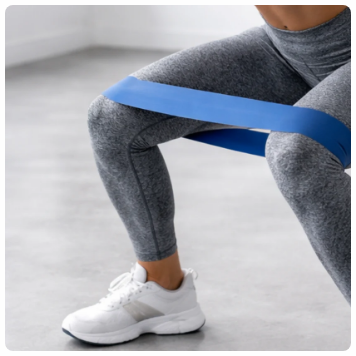
3. Squats: Keeping your back
straight, your head up, and your hands out in front for balance, slowly descend
into a seated position, with legs bent at a 90-degree angle. Then push up from
your heels to a straight-standing position, keeping your feet on the floor.
Depending on your current strength, try doing two sets of 10 to 20 repetitions
of each exercise, and work up from there.
HABIT 3: Get Off The
Roads
Physical therapist and ultradistance runner David Balsley
has been taking broken runners and putting them back together again for 30
years. His advice: Get on the treadmill, find a trail, hit the rubberized
track--whatever it takes to decrease your time on the pavement. "The surface is
just too hard," says Balsley. At the very least, he says, "Avoid concrete
roads; asphalt is softer. Better yet, try to stay on the soft shoulder."
This doesn't mean you should stay off the roads altogether, as they're
still the most available surface for most of us. But there are many other more
forgiving surfaces.
Make it stick: Make 1 day a week your
"off-road day." This week, try running on a treadmill. Next week, scout out a
local trail and run there. If you live near a boardwalk, hit the boards the
third week, or find an even, grassy surface in a park. (To find a trail near
you, visit the All American Trail Running Association's Web site at
trailrunner.com.
HABIT 4: Take Care of
Your Body
You won't be a runner for long--certainly not a happy
one--if you're constantly injured or feeling burned out. To help keep you
energized and raring to go, Clint Verran, an elite marathoner and physical
therapist in Rochester Hills, Michigan, offers this checklist for preventive
maintenance of the runner's body:
- Change your shoes every 300 to 500
miles.
- Stretch after every run.
- Get a weekly massage, with emphasis
on the legs.
- Get sufficient, regular sleep (most
people need 7 to 8 hours).
- Consider taking a glucosamine
supplement to keep your joints healthy.
- Seek medical attention for chronic
problems, both physical and mental.
|
Make it stick: Along with the
checklist above, try this: After your next run, take a walk. When former U.S.
Olympic marathoner and ultradistance champion Ted Corbitt ran regular 30-mile
training runs in New York City's Central Park, he noticed that what he did
immediately afterward had a huge impact on how he felt. "When I took the subway
home, I'd be stiff and sore for days," says Corbitt, now 84 and still running
strong. "But when I walked home, which took me about an hour, I'd never have
any muscle soreness." Okay, we're not saying you need to walk an hour after all
your runs, but even 5 minutes is a great way to cool down, mentally regroup,
and help those leg muscles recover more quickly.
HABIT 5: Keep It
Fresh, Keep It Fun
We runners can be creatures of habit, which is
fine. That's what this article is all about, after all. But we can take our
running habits too far, in which case they become ruts. To keep your running
from getting stale, make a habit of shaking things up on occasion--by changing
your running route, your training program, and your races.
"One way
to do this is to plan one new running adventure a year," says Gale Bernhardt of
Boulder, Colorado, an endurance coach for Active.com. "Maybe it's a relay race
you do with your training buddies, maybe it's exploring a new trail, or maybe
it's a marathon in an interesting place. Whatever it is, make it something
different and interesting."
This advice can also extend to what you
wear. While ours is not an accessory-driven sport, there have been tremendous
innovations in running gadgets and apparel in the last 10 years. Keep your mind
open to these things.
Make it stick: Give yourself a running
makeover this year--and every year thereafter. Here's how:
- Try a new brand of shoes.
- Buy a new winter (and summer)
running outfit.
- Tweak your running schedule: Do one
of your weekly runs on a different day than you normally do, or at a different
time than you normally do.
- Run a different course each
month--with someone you haven't run with in a while. Plan a running adventure
for you, your family, or your training friends. Check
runtheplanet.com or
marathonguide.com for interesting new places and
events to try.
|
HABIT 6: Run To The Peaks, Rest In The
Valleys
Elite runners train hard, but not all year long. After
peaking for major races, Deena (Drossin) Kastor, Sonia O'Sullivan, and Joseph
Chebet take time off. So should you. A week or two--maybe twice a year--will
enable you to rest and recharge. Use the time to do some cycling, begin a home
project, or take a vacation. You'll come back to running stronger than ever.
And don't worry: You won't lose conditioning during this relatively short
break. If you're worried about gaining weight, this is the time to explore the
gym, start a strength-training program (see Habit 2), or simply get out for a
brisk 20-minute walk each day.
Make it stick: Take a holiday
from running, but stay active with a health club "six pack." That is, over a
12-day period, try six different activities spread out every other day. For
example, take a spin class 1 day, do a circuit of free weights next time, hop
on the elliptical trainer for 30 minutes, do a circuit of resistance machines,
walk on the treadmill for 30 minutes, and take a yoga class. The stretching and
strengthening will be good for your body, you'll burn plenty of calories thanks
to the cardio work, and you'll return to running fit, happy, and energized.
Also, you may just find a favorite new cross-training activity or two you'll
want to continue with. (If you don't belong to a gym, most clubs sell weekly or
monthly memberships.)
HABIT 7: Build An Extended Running Family
When then 42-year-old Dick Murphy started running in 1977, he hooked
up with a group of runners who trained near the bucolic Nissequogue River in
the New York City suburb of Smithtown. They called themselves the River Road
Rats. A year after he started running with the group, Murphy qualified for the
Boston Marathon, and he's done it every year since. Murphy, now 68, attributes
his consistency and longevity in the sport to the Rats. "They're a great bunch
of people," says Murphy. "We run together, solve the world's problems, then go
out and have breakfast together every Sunday."
While the solitude of
a solo run will always remain one of the great joys of our sport, chances are
you'll stay more motivated if you plug into a "running family." That could be a
local club or training group like the River Road Rats, an online runner's
forum, or simply a group of training partners and friends. Together, you'll
help each other stay in the game for many years to come.
Make it
stick: Visit http://www.runningintheusa.com/ to find a running
club in your area. Or just make a point to start getting together with a
running friend or two each week at the same scenic locale.
HABIT 8:
Run For Others
Ask yourself this question: Why do I run? To feel
better, sure. To stay fit, definitely. Still, as our running lives progress, we
sometimes need more than this to get ourselves out the door. Ruth Anne Bortz
started running at age 48. That was back in 1978, and she's still at it. In
fact, she completed the Boston Marathon in 2002 with her husband, Walter,
making them the oldest married couple ever to do so.
But her
motivation has changed during that time. "Early on, I ran for competition,"
says Bortz. "Then I ran as an example to my children. Now, I'm running to get
others started. I see myself as an apostle of running."
Make it
stick: Make this the year to join thousands of other charity runners who
run and race while raising funds for worthy causes, through such programs as
the Leukemia and Lymphoma Society's Team in Training (teamintraining.org) or the Arthritis Found-ation's
Joints in Motion (arthritis.org/events). Or do like Ruth Anne Bortz
does. Be an apostle. Spread the good word about our sport. Each year, try to
get at least one friend, co-worker, or family member to start running. Again,
the idea here is to incorporate each of these eight training habits into your
exercise program. This will take conscious effort at first, and you'll need to
sift through what works and what doesn't. But if you're diligent, and stick
with the program for a few weeks, these strategies will become standard
operating procedure. |
 Fuel Your Body
 Get Fitter
 Get Stronger
 Then Go For It