Cortisol, Stress And Body Fat - Straight Answers To the Top 20 Questions About The Stress Hormone
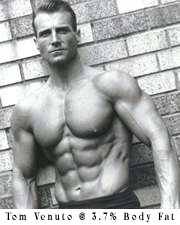
By Tom Venuto - author of Burn The Fat, Feed The Muscle
It seems that every time science uncovers some type of association between body fat and anything, opportunistic entrepreneurs are waiting in the shadows to create a product and a marketing campaign around it. They ride the wave into the multi millions, until the buzz dies down or until the Federal Trade Commission (FTC) sues and slaps a padlock on their warehouse doors. Then, it’s on to the “next big thing in weight loss,” because they know there will always be a gullible crowd eagerly waiting for the next quick fix. The most recent example is when researchers discovered a correlation between cortisol and abdominal body fat. Cortisol was then blamed as the latest culprit in the obesity problem, and cortisol-suppressing pills were touted as the “miracle solution.”
Big Claims, Little Proof
After a web search on the subject of cortisol, here are some of the claims you may find:
|
The advertising claims include just enough scientific fact to make even the savviest consumers say, “That makes sense, I think I’ll try that.” They also hit home emotionally by focusing on common hot buttons such as stress (who isn’t at least a little stressed in this day and age?) Brilliant marketing. Convincing. Unfortunately, most of the claims being made are completely false, with only a tiny thread of truth woven in.
Cortisol is a very important hormone that you must understand if you want to get maximum results from your training and nutrition programs, but if you don’t educate yourself, you may become one of the millions of victims to fall for the latest fads. The answers to the frequently asked questions in this article will arm you with the science-based facts, while helping you steer clear of the hype-based scams.
What is cortisol?
Cortisol is a hormone produced by your adrenal glands. It falls into a category of hormones known as “glucocorticoids”, referring to their ability to increase blood glucose levels. Cortisol is the primary glucocorticoid.
Why does your body produce cortisol?
Cortisol is a stress hormone. Your body produces cortisol in response to stress, physical, mental or emotional. This can include extremely low calorie diets, intense training, high volume training, lack of quality sleep as well as common daily stresses such as job pressures, fights with your spouse or being caught in a traffic jam. Trauma, injury and surgery are also major stressors to the body (much of the research done on cortisol and stress has been done on recovering patients, and such findings may not carry over to healthy, athletic populations).
What does cortisol do?
Cortisol is part of the fight or flight response. Faced with a “life or death” situation, cortisol increases the flow of glucose (as well as protein and fat) out of your tissues and into the bloodstream in order to increase energy and physical readiness to handle the stressful situation or threat.
How do you know whether your cortisol levels are high?
You can get your cortisol levels tested if you choose to. The most common method of testing is a blood test (blood cortisol levels). Saliva and 24 hour urine tests are also available.
What is a normal level of cortisol?
Cortisol levels are higher in adults than children and levels fluctuate throughout each 24 hour period, so tests must account for the time of day. Cortisol concentrations are highest in the early morning around 6 – 8 a.m. and they are also elevated after exercise (a normal part of your body’s response to exercise). The lowest levels are usually around midnight. According to the Medline Encyclopedia, normal levels of cortisol in the bloodstream at 8:00 a.m. are 6-23 mcg/dl.
Should you get your cortisol levels tested?
For serious competitive athletes, it may be worth the time, expense and inconvenience to have cortisol tests done on a regular basis. Some strength and conditioning coaches insist on it. For the average trainee, as long as you are aware of the factors that produce excessive cortisol and take steps to keep it in the normal, healthy range, then testing is probably not necessary.
Is cortisol related to abdominal obesity?
Yes. There is a link between high cortisol levels and storage of body fat, particularly “visceral” abdominal body fat (also known as intra-abdominal fat). Visceral fat is stored deeper in the abdominal cavity and around the internal organs, whereas “regular” fat is stored below the skin (known as subcutaneous fat). Visceral fat is particularly unhealthy because it is a risk factor for heart disease and diabetes.
Does Cortisol Make you fat?
No, cortisol is not “the thing” that makes you fat. In fact, one of the effects of cortisol is to increase the breakdown of stored adipose tissue into glycerol and fatty acids where it can enter the bloodstream and then be used as energy. High levels of cortisol are merely one contributing factor to storage of abdominal fat, not the primary cause. An excess of calories from too much food and not enough exercise is what makes you fat.
If cortisol is related to abdominal obesity, then will taking a cortisol suppressing pill get rid of abdominal (belly) fat?
No. Just because there is an association between high cortisol levels and abdominal body fat doesn’t mean that a taking a cortisol-suppressing pill will remove abdominal body fat. The studies which showed a relationship between cortisol and body fat did not test whether suppressing cortisol removes fat that is already deposited on your body.
Does stress make you fat?
No. If it did, then everyone who is stressed would be gaining fat. Many people lose weight while under stress. In some studies, test subjects with the highest cortisol levels lost the most weight. Stress, by itself, does not increase body fat. However, if stress stimulates appetite and leads to overeating, then the excess calories from “stress eating” can make you fatter.
Is cortisol is bad for you?
Cortisol is not “bad for you,” it is a hormone that is essential for life as part of our natural stress response. There are many hormones in our bodies, which in the proper amounts, maintain good health, but in excess or in deficiency, contribute to health problems. Cortisol is no different. You want to maintain a healthy, normal level of cortisol, not suppress your cortisol to nothing or allow it to remain elevated.
Chronically elevated cortisol levels may have a variety of negative effects. Cortisol is catabolic and elevated cortisol levels can cause the loss of muscle tissue by facilitating the process of converting lean tissue into glucose. An excess of cortisol can also lead to a decrease in insulin sensitivity, increased insulin resistance, reduced kidney function, hypertension, suppressed immune function, reduced growth hormone levels, and reduced connective tissue strength. Chronically elevated levels of cortisol can also decrease strength and performance in athletes. Incidentally, Cushing’s syndrome is a disease of high cortisol levels, while Addison’s is a disease of low cortisol levels.
Can suppressing cortisol improve your muscle growth and strength?
High cortisol levels can increase muscle protein breakdown and inhibit protein synthesis (building up muscle proteins), so a chronically elevated cortisol level is clearly counterproductive to building muscle. Bringing elevated cortisol levels back to normal may improve recovery, strength, hypertrophy and performance. However, there is no scientific evidence that reducing your cortisol levels below normal will have any effect on increasing muscle growth.
Should you take a cortisol-suppressing supplement to help you lose weight?
In my opinion, no, absolutely not. Cortisol suppressing supplements are not a valid solution for losing weight. The FTC has filed lawsuits against the makers of Cortislim and Cortistress, charging them with making false and unsubstantiated claims that their products can cause weight loss. Lydia Parnes, acting director of the FTC’s bureau of consumer protection says, “The defendant’s claims fly in the face of reality. No pill can replace a healthy program of diet and exercise.” Reducing excessively high cortisol levels through supplement use may prove beneficial in some ways for hard training athletes. However, pills do not make you lose fat. Body fat is lost by creating a caloric deficit through exercise and nutrition.
Should you take a cortisol-suppressing supplement to help control your stress levels?
There are quite a few supplements, mostly herbs, which are reputed to have “calming,” “relaxing,” “tranquilizing,” “stress-relieving” or “anti-anxiety” effects. These include Magnolia bark, kava kava, valerian, L-theanine and too many others to mention. However, very few studies exist which have directly tested the effects of these herbs on cortisol levels. Although some people may find value in these types of products, the ideal solution is to reduce the stress or change your perception of the stress to lessen its physical effects. Treating symptoms does not remove causes. It can be dangerous to “band-aid” the effects of stress while the stress remains in place.
What should you do if you have a lot of stress in your life?
It makes sense to take steps to reduce stress in your life and lessen the impact of stressors that cannot be avoided. Trying to avoid stress completely is not possible, nor is it desirable. Stress is an important part of life because you can’t achieve positive adaptations and growth without stress to trigger them. It’s continuous stress you want to avoid. It’s okay to expose yourself to stress, provided there is a period of rest afterwards so you can fully recover.
One of the best ways to keep cortisol in the normal range is to reduce stress and allow time for recovery and renewal. There are effective and natural means of reducing stress that don’t cost a penny, including getting out in nature, deep breathing, enhancing sleep quality, relaxation exercises, meditation and visualization-guided imagery. It's important to develop a calm mind and sense of tranquility.
What’s in those cortisol pills anyway?
The ingredients can vary in type and quantity from one brand to the next. Some ingredients are included in the formulations to have a relaxing or stress reducing effect, some are included to reduce cortisol levels, while others are aimed at insulin and blood sugar stabilization. Cortislim, for example, contains Magnolia bark, beta sitosoterol, theanine, green tea extract, bitter orange peel extract (source of synephrine), banaba leaf extract, vanadium, vitamin C, calcium and Chromium.
Other ingredients that are often used in the various product formulations include Epidemium, phytosterols, tyrosine, Branched chain amino acids, ginseng, ashwaganda, astragalus, kava kava, St. John’s wort, Melatonin, SAM-e, Valerian, Gingko Biloba, Phosphatidyl Serine (PS), Acetyl L-carnitine and Glutamine. Reviewing all of these is beyond the scope of this article.
If you decide to take a cortisol suppressing supplement what should you look for?
Before you even think about supplements (or drugs), keep in mind that unnatural suppression of cortisol may not be wise or necessary, especially if you haven’t used all the natural cortisol and stress management strategies at your disposal first. Once your nutrition, training and recovery bases are covered, there is some solid research showing that certain supplements may be beneficial, especially for athletes engaged in extremely hard training.
Carbohydrate consumed with lean protein immediately after training has a cortisol suppressing effect. High glycemic index (GI) carbs in particular, cause an insulin spike, which not only helps restore muscle glycogen, stimulates protein synthesis and kick starts the recovery process, it also helps lower the exercise-induced rise in cortisol. The research supporting this practice is substantial. (This should serve as a warning to people on low carb diets that are so strict that they don’t even allow small amounts of carbs after workouts). Rather than solid food, many athletes prefer a liquid “meal” using a commercial post workout drink containing whey protein and maltodextrin plus dextrose or glucose (fast acting protein and high GI carbs) because the rapid absorption time may speed recovery.
Vitamin C, known mainly for cold or flu protection and antioxidant properties, may decrease cortisol levels. A study by Marsit, et al showed a reduction in cortisol levels in elite weightlifters taking 1000 mg. of vitamin C per day. Other studies have reported similar findings.
Phosphatidyl serine (PS) is a phospholipid, which appears to have cortisol suppressing properties. Studies by Fahey and Monteleone have shown that daily doses of 800 mg can reduce cortisol. These studies did not conclude that PS would help you lose weight or gain more muscle.
Glutamine is an amino acid, which in some studies, has been shown to decrease cortisol and prevent a decrease in protein synthesis. Many strength athletes swear by glutamine for improved recovery, but the research is still not conclusive about efficacy or dosages for athletes or bodybuilders. Much of the research on Glutamine was performed on patients recovering from surgery, burns or traumas (severe stresses to the body).
Acetyl-L Carnitine (ALC) has been studied in Alzheimers patients as a method of improving cognitive function. One study showed that long term use of Acetyl L Carnitine lowered cortisol in the Alzheimers patients. Research on rats and mice has shown that ALC increases luteinizing hormone, which may in turn elevate testosterone. Whether these findings carry over to healthy athletes has yet to be proven, but some coaches and athletes believe that ALC lowers cortisol and elevates testosterone.
It’s important to note that the research on some of these substances is often conflicting and inconclusive. It's also important to note that many of the cortisol suppressing supplements which are marketed to athletes or to people seeking weight loss do not contain doses anywhere near the amounts that were used in the research. (Yet another way that supplement companies deceive consumers).
How can you lower your cortisol levels naturally?
You can lower cortisol naturally. In fact, if you are overtrained, unnatural cortisol suppression may be nothing more than a “band aid,” and continued overtraining can lead to adrenal exhaustion, which could take months to remedy. Sometimes the best thing you can do is take a rest or decrease your training volume and intensity rather than artificially attempt to suppress cortisol. Symptoms of overtraining include elevated resting pulse, sleep disturbances, fatigue, decreased strength and decreased performance.
|
How do you spot a weight loss pill scam?
The cortisol pill is just one in a long string of bogus weight loss products, and it won’t be the last! Why? Because weight loss supplements are big business! Eight or nine figure fortunes have been made from the sales of a single product, which was later proven to be a total farce.
How do you protect yourself? Do your homework! Don’t take anything unless you know exactly what’s in the product, why it’s in the product and how much is in the product. Review the scientific research. Don’t buy a weight loss product just because a radio personality says it works! Don’t jump on the phone with your credit card in hand after watching a thirty-minute infomercial! In this day and age, you have to be smarter than that!
The United States Federal Trade Commission (FTC) is the government agency responsible for monitoring deceptive advertising. Recently, the FTC published their new ‘RED FLAG” brochure and their deception in advertising workshop, designed to help advertising media and consumers to screen out bogus weight loss claims for nonprescription drugs, supplements, creams, wraps, devices and patches.
You can download the FTC reports here:
Federal Trade Commission’s Red Flag Brochure
(11 pages, free download)
www.ftc.gov/bcp/conline/edcams/redflag/index.html
Deception in weight loss advertising workshop (74
pages, free download)
http://www.ftc.gov/os/2003/12/031209weightlossrpt.pdf
For more information on the FTC lawsuit against Cortislim and Cortistress:
“FTC TARGETS PRODUCTS CLAIMING TO AFFECT THE
STRESS HORMONE CORTISOL”
http://www.ftc.gov/opa/2004/10/windowrock.htm
“CORTISLIM SCAMMERS TARGETED BY FTC CLASS
ACTION LAWSUITS”
http://www.dietfraud.com/Dietcraze/scams_cortislim.html
“FTC: CORTISOL CLAIMS DEFY REALITY”
http://www.consumeraffairs.com/news04/ftc_cortisol.html
Conclusions
Excessive cortisol is not good. But cortisol is not inherently bad; it’s a vitally important hormone and part of your body’s natural stress response. Cortisol does not make you fat. Stress does not make you fat. Stress may lead to increased appetite… Increased appetite may lead to eating too much… Eating too much makes you gain fat. Make sense?
Cortisol suppressing agents may have some practical uses. But rather than thinking of cortisol supplements as a weight loss miracle (which they most surely are not), get yourself on a solid exercise and nutrition program and seek natural ways enhance recovery and reduce stress. By doing this first, you may be pleasantly surprised to find that you’re losing fat and gaining muscle and there isn’t even a need to take a supplement at all.
References:
1. Bidzinska, B., et al., Effect of different chronic intermittent stressors and acetyl L Carnitine on hypothalamic beta endorphin and GnRH and on plasma testosterone levels in male rats. Neuroendocrinology, 1993, 57(6): 985-990
2. Bjorntorp, P., Body fat distribution, insulin resistance, and metabolic diseases. Nutrition, 1997, 13: 795-803
3. Bjorntorp, P., Do stress reactions cause abdominal obesity and comorbidities? Obesity Reviews, 2001, 2: 73-86
4. Brillon, et al., “Effect of cortisol on energy expenditure and amino acid metabolism in humans,” Am J Physiol 268 1995: E501-13.
5. Bruno, G, et al,, Acetyl L Carnitine in Alzheimer disease: a short term study on CSF neurotransmitters and neuropeptides. Anzeihmer Disease & Associated Disorders, 1995. 9(3): p. 128-131
6. Chrousos, et al., CRH, Stress and Depression: An Etiological Approach (Las Vegas, NV: Conference on Cortisol and Anti-Cortisols, 1997)
7. Chrousos, G.P., The role of stress and the hypothalamic-pituitary-adrenal axis in the pathogenesis of the metabolic syndrome: neuro-endocrine and target tissue-related causes. International Journal of Obesity and Related Metabolic Disorders, 2000, 24, S50-55
8. Dallman, M.F., Pecoraro, N., Akana, S.F., La Fleur, S.E., Gomez, F., Houshyar, H., Bell, M.E., Bhatnagar, S., Laugero, K.D., & Manalo, S. Chronic stress and obesity: a new view of "comfort food". Proceedings of the National Academy of Sciences, (2003), 30, 11696-11701
9. Epel ES, McEwen B, Seeman T, Matthews K, Castellazzo G, Brownell KD, Bell J, Ickovics JR. Stress and body shape: stress-induced cortisol secretion is consistently greater among women with central fat. Psychosom Med. 2000 Sep-Oct; 62(5):623-32.
10. Fahey, et al., Hormonal Effects of Phosphatidylserine (PS) during two weeks of intense weight training (Orlando, Fl : ACSM Conference, 1998)
11. Fry, et al., “Resistance exercise overtraining and overreaching. Neuroendocrine responses,” Sports Med, 1997, 23 (2): 106-129.
12. Futterman, A.D., et al., Immunological and physiological changes associated with induced positive and negative mood, Phychosomatic medicine, 1994, 56(6): 499-511
13. Griffin J, Ojeda S. Textbook of endocrine physiology, 3rd ed. New York: Oxford University Press, 1996.
14. Hickson, et al., “Glutamine prevents down regulation of myosin heavy chain synthesis and muscle atrophy from glucocorticoids,” Am J Physiol, 1995, 268: E730-E734.
15. Hickson, et al., “Glucocorticoid antagonism by exercise and androgenic-anabolic steroids,” Med Sci Sports Exerc, 1990, 22: 331-340.
16. Kraemer, W.J., et al, Physiological adaptations to a weight-loss dietary regimen and exercise programs in women. Journal of Applied physiology, 83, 270-279.
17. Krsmanovic, L.Z., et al., Actions of Acetyl L canitine on the hypothalamo-pituitary-gonadal system in female rats. Journal of Steroid Biochemical Molecular Biology, 1992. 43(4): 351-358
18. Kelley, et al, ‘energy restriction and immunocompetence in overweight women.” Nutrition Research 18.2 (18): 159-169
19. Laitinen, J., Ek, E., & Sovio, U. Stress-related eating and drinking behavior and body mass index and predictors of this behavior. Preventive Medicine, 2002, 34, 29-39
20. Marsit, J.L, et al., Effects of ascorbic acid on serum cortisol and the Testosterone:Cortisol ratio in junior elite weightlifters, Journal of Strength And Conditioning Research, 1998, 12(3), 179-184
21. Martignoni, E., et al, Acetyl L carnitne acutely administered raises beta endorphin and cortisol plasma levels in humans. Clinical Neuropharmacology, 1988. 11 (5) p. 472-47
22. Monteleone, P., et al, Effects of phosphatidyl serine on the neuroendocrine response to physical stress in humans. Neuroendocrinology, 1990, 52:243-248,
23. Monteleone, P., et al, Blunting by chronic phosphatidyl serine administration of the stress-induced activation of the hypothalamo-pituitary-adrenal axis in healthy men. European Journal of Clinical Pharmacology, 42(4): 385-388, 1992
24. Ottosson, K Vikman-Adolfsson, S Enerback, A Elander, P Bjorntorp and S Eden, Growth hormone inhibits lipoprotein lipase activity in human adipose tissue, Journal of Clinical Endocrinology & Metabolism, 2000, 80: 936-941,
25. Palermo, S., et al, The effect of L-acetyl carnitine on some reproductive functions in the oligoasthenospermic rat. Hormonal metabolism research, 1990. 22(12), 622 – 626
26. Peeke PM, Chrousos GP. Hypercortisolism and Obesity. Ann NY Acad Sci 1995, 771:665-76.
27. Rizza, et al., “Cortisol-induced insulin resistance in man. Impaired suppression of glucose production and stimulation of glucose utilization due to a post receptor defect of insulin action,” J Clin Endocrinol Metab, 1992, 54: 131-138.
28. Roberts, A.C. et al, Overtraining affects male reproductive status. Fertility and Sterility, 1993, 60(4):686-692
29. Rowbottom, et al., “The emerging role of glutamine as an indicator of exercise stress and overtraining,” Sports Med 21.2 1996: 80-97.
30. Roland Rosmond, Mary F. Dallman and Per Björntorp, Stress-Related Cortisol Secretion in Men: Relationships with Abdominal Obesity and Endocrine, Metabolic and Hemodynamic Abnormalities, The Journal of Clinical Endocrinology & Metabolism, 1998, Vol. 83, No. 6 1853-1859
31. Simmons, et al., “Increased proteolysis: an effect of increases in plasma cortisol within the physiological range,” J Clin Invest, 1984, 73: 412-420.
| Author Tom Venuto
For more great articles like this one, go to |