| From
BODi Fitness & Health
by
Steve Edwards
 We've all heard about superfoods—consumables with mystical
powers to cure whatever it is that ails you and that will help you live
forever. This list will be different. Today we'll look at some common items
that should be on your menu, even though you probably haven't heard them touted
as the next great miracle cure. In fact, some of these you probably thought
were bad for you. We've all heard about superfoods—consumables with mystical
powers to cure whatever it is that ails you and that will help you live
forever. This list will be different. Today we'll look at some common items
that should be on your menu, even though you probably haven't heard them touted
as the next great miracle cure. In fact, some of these you probably thought
were bad for you.
I begin this list with a caveat; we're all different. One
person's superfood is another's trip to the emergency room (soy comes to mind
here). There are some nutritional factors we all share, such as the need to eat
a certain amount of calories that come from fats, proteins, and carbohydrates
to keep our bodies functioning as they should. Beyond this, our exact dietary
needs begin to diverge.
 There are some obvious reasons for this. Lifestyle and activity
level are pretty easy to understand. That someone who is pregnant or training
for an Ironman needs more calories than a computer programmer who sits for 14
hours a day isn't difficult to fathom. Neither is the fact that a 90-pound
ballerina uses less fuel than a 350-pound lineman. That we all eat a different
number of calories and a different percentage of fats, proteins, and especially
carbs is obvious, or at least should be, since the bigger you are and the
harder you work the more fuel your body needs to recharge itself. There are some obvious reasons for this. Lifestyle and activity
level are pretty easy to understand. That someone who is pregnant or training
for an Ironman needs more calories than a computer programmer who sits for 14
hours a day isn't difficult to fathom. Neither is the fact that a 90-pound
ballerina uses less fuel than a 350-pound lineman. That we all eat a different
number of calories and a different percentage of fats, proteins, and especially
carbs is obvious, or at least should be, since the bigger you are and the
harder you work the more fuel your body needs to recharge itself.
What's more subtle are body type differences. These can be
difficult to understand, and many people never figure them out. Blood type,
heredity, and other factors come into play and make each of us unique
individuals. When it comes to eating, most of us spend a fair portion of our
lives figuring out just what we should be eating to maximize our life
experience (which doesn't necessarily mean we choose the healthiest options).
For this reason, there is no true "superfood." There are, however, helpful
foods that are specific to each of us. By experimenting with our diets, we will
all find a course of eating that makes us feel better than anything else.
To help you begin your self-experiment, here's a list of
common foods that you'll want to try. Most of these are very healthy for almost
everyone, even though some have been vilified by society. This doesn't mean
that they'll transform you into an epitome of health, but they're certainly
worth a try.
 Peanut butter. I'm leading with this
because I'm fairly certain peanut butter single-handedly kept me from getting
chronic fatigue syndrome (CFS) during the no-fat 90s. In the early 90s, the
average amount of fat in our daily diets plummeted while the incidence of CFS*
skyrocketed. This was particularly true among the otherwise healthy endurance
sports sect. In the early 90s, my body fat was once recorded at 2 percent.
Sure, I was ripped. Healthy? Not so much. I'm pretty sure that only my
adherence to peanut butter as a healthy fat source kept my athletic obsession
intact. Peanut butter. I'm leading with this
because I'm fairly certain peanut butter single-handedly kept me from getting
chronic fatigue syndrome (CFS) during the no-fat 90s. In the early 90s, the
average amount of fat in our daily diets plummeted while the incidence of CFS*
skyrocketed. This was particularly true among the otherwise healthy endurance
sports sect. In the early 90s, my body fat was once recorded at 2 percent.
Sure, I was ripped. Healthy? Not so much. I'm pretty sure that only my
adherence to peanut butter as a healthy fat source kept my athletic obsession
intact.
* CFS is the colloquial veil for
debilitating disorders marked by chronic mental and physical
exhaustion.
A bevy of modern studies now vindicates my opinion
with science. Peanuts are high in both fat and calories but their fat has been
associated with decreased total cholesterol and lower LDL and triglyceride
levels. It's also high on the satiation meter, meaning that a little can fill
you up.
- Cabbage. Every Asian culture, as well as European, eats more cabbage than
we do and it's time we thought about it more often than when we happen to
splurge on P.F. Chang's. Cabbage is absurdly low in calories and very high in
nutrients. Among these is sulforaphane, which a Stanford University study
showed as boosting cancer-fighting enzymes more than any other plant
chemical.
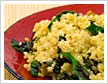 Quinoa. This "grain" isn't
technically a grain at all. It just tastes like one. It's actually a relative
of spinach, beets, and Swiss chard. All of these are extremely healthy from a
nutrient point of view, but quinoa is the only one that can fool you into
thinking you're eating a starch. It's high in protein, minerals, vitamins, and
fiber. Quinoa. This "grain" isn't
technically a grain at all. It just tastes like one. It's actually a relative
of spinach, beets, and Swiss chard. All of these are extremely healthy from a
nutrient point of view, but quinoa is the only one that can fool you into
thinking you're eating a starch. It's high in protein, minerals, vitamins, and
fiber.
- Spelt. This
one is actually a grain but its origin is slightly mysterious. Some claim it
comes from wheat while others say it's a different species. Regardless, it has
a high nutritional profile and can be eaten by many people with gluten
intolerance, making it a good alternative to wheat products. Spelt can be found
in many products, but as it's still considered a "health food," it's off the
major processing radar. Unlike wheat, if spelt is on the ingredients list, it's
probably good for you.
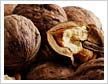 Walnuts. All nuts, really, but
walnuts seem to be the king of the nut family. Used in Chinese medicine for
centuries, walnuts are becoming more associated with Western health than ever
before. A 2006 study published in the Journal of the American College of
Cardiology found that eating walnuts after a meal high in bad fat could
reduce the damaging effects of the meal. Walnuts. All nuts, really, but
walnuts seem to be the king of the nut family. Used in Chinese medicine for
centuries, walnuts are becoming more associated with Western health than ever
before. A 2006 study published in the Journal of the American College of
Cardiology found that eating walnuts after a meal high in bad fat could
reduce the damaging effects of the meal.
- Avocado. Another villain in the old no-fat movement, avocados are now
thought to be one of the healthiest fat sources available. Beyond this, they
have very high amounts of cancer-fighting antioxidants, and recent research
seems to indicate that avocados' phytonutrients may also help with the
absorption of nutrients from other sources.
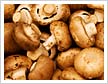 Mushrooms. The more we learn about
phytonutrients—those that come in a small enough quantity to be missed on
a food label (this is a layman's definition only)—the more we should
admire ancient cultures. These culinary delights have been feuded over for
decades until, for some reason, we'd decided they were pretty much empty
calories. The study of phytonutrients has taught us that warring over fungi may
have held some rationale after all. Mushrooms are loaded with antioxidants and
are thought to boost the immune system, help ward off some cancers, and have
high amounts of potassium. Furthermore, researchers at Penn State University
have found that mushrooms may be the only food to contain an antioxidant called
L-ergothioneine. Mushrooms. The more we learn about
phytonutrients—those that come in a small enough quantity to be missed on
a food label (this is a layman's definition only)—the more we should
admire ancient cultures. These culinary delights have been feuded over for
decades until, for some reason, we'd decided they were pretty much empty
calories. The study of phytonutrients has taught us that warring over fungi may
have held some rationale after all. Mushrooms are loaded with antioxidants and
are thought to boost the immune system, help ward off some cancers, and have
high amounts of potassium. Furthermore, researchers at Penn State University
have found that mushrooms may be the only food to contain an antioxidant called
L-ergothioneine.
- Tea. Despite
a ton of positive press over the last, oh, century, tea and coffee are still
the devil's brew in some circles. Perhaps even worse is how many coffee and tea
restaurants have bastardized these natural brews into sugar- and fat-filled
dessert items. Both tea and coffee, in their basic states, have no calories and
many healthy benefits. Between the two, coffee is arguably more popular, most
likely due to its higher caffeine content. But tea is probably healthier. Both
have a high amount of antioxidants but stats on tea are almost off the charts.
A recent study on calcium supplementation in elderly women, published in the
American Journal of Clinical Nutrition, showed that bone mineral
density at the hip was 2.8 percent greater in tea drinkers than in non-tea
drinkers.
 Cinnamon. Maybe the novel
Dune was more prescient than we've given it credit for. After all, the
plot revolves around an entire solar system at war over a cinnamon-like spice.
Nowadays, we think of this as little but the flavoring in a 1,100-calorie gut
bomb we find at the mall. But Frank Herbert knew a thing or two about history
and cinnamon has long been the prized possession of the spice world. It has a
host of benefits, but perhaps none more important than this one: USDA
researchers recently found that people with type 2 diabetes who consumed one
gram of cinnamon a day for six weeks significantly reduced their blood sugar,
triglycerides, and LDL cholesterol. "He who controls the spice controls the
universe!" Cinnamon. Maybe the novel
Dune was more prescient than we've given it credit for. After all, the
plot revolves around an entire solar system at war over a cinnamon-like spice.
Nowadays, we think of this as little but the flavoring in a 1,100-calorie gut
bomb we find at the mall. But Frank Herbert knew a thing or two about history
and cinnamon has long been the prized possession of the spice world. It has a
host of benefits, but perhaps none more important than this one: USDA
researchers recently found that people with type 2 diabetes who consumed one
gram of cinnamon a day for six weeks significantly reduced their blood sugar,
triglycerides, and LDL cholesterol. "He who controls the spice controls the
universe!"
- Natto. This
is on the list because, for one, it's one of the few foods I've eaten that I
truly don't like. But mainly, it's here because we've really messed up the way
we eat soy. Natto is fermented soybeans and very popular in Japan, which is
where I had it. It's becoming more popular here and this is most likely due to
its health benefits. Nearly all the soy options we're offered in the U.S. are
non-fermented. The list of health benefits of fermented soy is a mile long.
It's associated with reducing the risk of cancer, minimizing the likelihood of
blood clotting, aiding digestion, increasing blood circulation, an improved
immune system, improving bone density, lessening the likelihood of heart
attacks, more vibrant skin, and reducing the chance of balding. And it also has
strong antibiotic properties, among other things. So you might want to ditch
the soy crisps, soy ice cream, and your iced soy mochas and add some natto to
your diet.
|
|