 Fuel Your Body
 Get Fitter
 Get Stronger
 Then Go For It
Weight Training: The Best Way to Get Lean
| by
Steve Edwards
This is in contrast to our weight lifting cultural icons. Arnold, Hulk Hogan, and the WWE are who and what we tend to associate with pumping iron. It may be more accurate, however, to associate those massive bodies with anabolic steroids and turn our attention to the real cultural icon for weight training: Jack LaLanne. The guy who practically invented "lifting" as we now know it is well into his 90s and can still ace the fitness standard designed for a 30-year-old. Once considered a bodybuilder, his legacy has far more to do with his fitness exploits than his brawn. His feats include things like swimming with his hands and feet shackled and towing 70 people in 70 boats across Long Beach Harbor on his 70th birthday. The key to Jack's success over all these years has been lifting weights.
The basics of body compositionThe science of how our bodies work is complex. However, the basics of body composition, and why we get obese and out of shape, are very simple. Due to the former, we can see how it's possible to believe that one magic nutrient, drug, or movement might transform us from fat to fit. But once we understand the latter, we see how this is highly unlikely, if not impossible.
While there are different body types, all of them look good when all of the above are in the correct proportion. We look worse when our body fat percentages exceed their intended uses. Excess body fat inhibits the body's natural ability to function, and, hence, leads to myriad health problems. To correct this, we need to reduce the amount of body fat in our bodies. There are many ways to make this happen. Eating less, eating better, and exercising moves the process in the right direction. But the easiest way to do this is to add muscle. And the best way to add muscle is to exercise using resistance. Weight training basics
The fat-burning misnomerMany less intense programs, like aerobics and most "cardio" programs, focus on training in what some people call the "fat burning zone." This term is misleading because what it really means is utilizing fat for fuel—not burning body fat. Well—wait—it does actually mean that. The process is a little complicated, but I'll simplify it.
Your body has a limited store of glycogen—about enough for an hour or so of hard work. It attempts to save this for intense exercise (and brain function) and tries to do low-level tasks by burning body fat. Training at low intensity has a benefit, but it's only a fraction of what high intensity can accomplish in the same amount of time. And even though you are burning stored fat instead of glycogen, you aren't stimulating your muscles in the same way. This lack of stimulation means that you aren't creating the same level of hormone release, organ function, or muscle growth. The result is that you get far less fitness improvement in a given amount of time. The metabolic process
Why your scale is lying to youUsing the above body-composition basics, it's pretty easy to understand why losing weight should not be your ultimate goal. Instead, you should focus on losing body fat, which means that you'll get smaller at the same weight. By volume, muscle weighs far more than body fat. So much so that by adding muscle you can actually gain weight as you shrink. This isn't true for most people, but many "skinny fat" people find that all of their health indicators improve as they gain weight.
What to do if you want lean muscles instead of bulky musclesThe bad news is that there is no such thing as a lean muscle. The good news is that there is really no such thing as a bulky muscle. We use these terms to describe a body type, not a muscle. Lean muscle is also a term that means, well, muscle. All muscle is lean. Body fat is not lean. So the only non-lean muscle is one that has excess fat around it. You can't really change a muscle's shape. It either grows, called hypertrophy, or shrinks, called atrophy. Weight training programs target muscle growth. All muscles are lean and shapely. To look lean and shapely, you want to build your muscles so that your metabolism increases and your body-fat percentage decreases.
It's also easy to control whether or not you become "bulky" through the number of repetitions (or time spent) doing resistance work. Sets that are longer than 12 or so repetitions (or about 30 seconds) self-limit the muscle's ability to grow. Therefore, those looking for a "lean" look should target higher reps once they've decided that their muscles are large enough. And the added benefit of antiaging
Finally, nothing helps you age more gracefully than weight training. There are other ways to stay lean, but using resistance training creates hormonal releases that offset the aging process better than anything else. Furthermore, you lose muscle as you age—about 1 percent or so per year beyond the age of 30. Antiaging medicine is often prescribed in the form of injections of the very same hormones that are released when you do intense resistance workouts. Weight training is a cheaper, and arguably more effective, alternative to spending a lot of money on doctors. Just ask Jack LaLanne. (And stay tuned for more information about our new weight training program . . . ChaLEAN Extreme!) |
| back to top |
 When it comes to reshaping your body, nothing is quite as
effective as lifting weights. Cardio is great for your heart, Pilates will help
you get stronger, and yoga will balance you out; but nothing compares with a
well-designed resistance program for getting lean.
When it comes to reshaping your body, nothing is quite as
effective as lifting weights. Cardio is great for your heart, Pilates will help
you get stronger, and yoga will balance you out; but nothing compares with a
well-designed resistance program for getting lean.
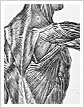 A simple overview of body composition looks like this. At the
base is a skeleton that is held together with connective tissues. This encases
most of your organs and circulatory system. Muscles surround the structure and
enable it to move. Body fat protects the organs and joints. It's all covered by
your largest organ, your skin. We're leaving out some obvious functionality but
this is basically what makes up your body composition, which determines your
shape.
A simple overview of body composition looks like this. At the
base is a skeleton that is held together with connective tissues. This encases
most of your organs and circulatory system. Muscles surround the structure and
enable it to move. Body fat protects the organs and joints. It's all covered by
your largest organ, your skin. We're leaving out some obvious functionality but
this is basically what makes up your body composition, which determines your
shape. Most weight training is what we call anaerobic. This
means, simply, that the intensity it takes to do it exceeds your body's aerobic
(oxygen-carrying) capability. Anaerobic training relies on something called the
Krebs cycle, which is a process in each cell that puts the body under stress.
This stress forces your body to adapt and works nearly every human function we
associate with fitness, including your body's aerobic system. So, oddly enough,
a well-crafted anaerobic workout program is all the work you need to have a
perfectly healthy aerobic system. This is because recovering from anaerobic
work requires your aerobic system to work. If you can understand this concept,
it will be easy to understand why weight training is so vital.
Most weight training is what we call anaerobic. This
means, simply, that the intensity it takes to do it exceeds your body's aerobic
(oxygen-carrying) capability. Anaerobic training relies on something called the
Krebs cycle, which is a process in each cell that puts the body under stress.
This stress forces your body to adapt and works nearly every human function we
associate with fitness, including your body's aerobic system. So, oddly enough,
a well-crafted anaerobic workout program is all the work you need to have a
perfectly healthy aerobic system. This is because recovering from anaerobic
work requires your aerobic system to work. If you can understand this concept,
it will be easy to understand why weight training is so vital. At low-level outputs, your body burns its stored fat
as fuel. At higher outputs, it burns sugars that have been stored in your blood
and liver, called blood glycogen. It's important to do both, but targeting fat
mobilization as your primary fuel source in your workout makes little sense,
unless you're training for endurance sports.
At low-level outputs, your body burns its stored fat
as fuel. At higher outputs, it burns sugars that have been stored in your blood
and liver, called blood glycogen. It's important to do both, but targeting fat
mobilization as your primary fuel source in your workout makes little sense,
unless you're training for endurance sports. This is, at its most basic, the speed at which your body engine
runs while resting. The more fit you are, the higher your metabolic rate is
likely to be. Excess muscle on your body takes more energy just to keep it
there. Body fat doesn't have the same requirements. In fact, it sort of does
the opposite, by gumming up the works and inhibiting the metabolic process.
Remember that muscle is there so that the body can move and do stuff. Fat is
there to protect the body, especially the organs. It is similar to having a
spare tire sitting inside of you. It adds weight and slows you down but does
nothing helpful for your metabolism. This means that the most effective way to
burn body fat is to add muscle to your frame because it burns fat around the
clock. That is precisely what Chalene Johnson's new program will do—and
you'll be hearing a lot more about "muscle burns fat" in the coming weeks.
This is, at its most basic, the speed at which your body engine
runs while resting. The more fit you are, the higher your metabolic rate is
likely to be. Excess muscle on your body takes more energy just to keep it
there. Body fat doesn't have the same requirements. In fact, it sort of does
the opposite, by gumming up the works and inhibiting the metabolic process.
Remember that muscle is there so that the body can move and do stuff. Fat is
there to protect the body, especially the organs. It is similar to having a
spare tire sitting inside of you. It adds weight and slows you down but does
nothing helpful for your metabolism. This means that the most effective way to
burn body fat is to add muscle to your frame because it burns fat around the
clock. That is precisely what Chalene Johnson's new program will do—and
you'll be hearing a lot more about "muscle burns fat" in the coming weeks. This is especially important to consider if you're
highly de-conditioned, because not only do you have more fat on your body than
you should, you probably have less muscle. As this ratio comes into balance,
the scale may not be dropping, but your body can be making substantial changes.
Furthermore, weight training can change your bone density. This does not
increase the size of your bones but increases their weight and strength. For
this fact alone, it's recommended that everyone add some resistance training
into their lifestyle as they age.
This is especially important to consider if you're
highly de-conditioned, because not only do you have more fat on your body than
you should, you probably have less muscle. As this ratio comes into balance,
the scale may not be dropping, but your body can be making substantial changes.
Furthermore, weight training can change your bone density. This does not
increase the size of your bones but increases their weight and strength. For
this fact alone, it's recommended that everyone add some resistance training
into their lifestyle as they age. "Bulky" (in quotes, because it's a matter of opinion)
is a term used for muscles that are larger than normal. These are much harder
to get than most of us, especially women, tend to believe. Bodybuilders
certainly wish it were a lot easier. But adding excessive muscle takes an
almost obsessive amount of work. Due to gravity, our bodies don't like to weigh
too much and resist adding muscle. It's easier to add excess fat because not
much can be done about overeating. Adding bulk is so difficult that steroids
have become a huge societal problem.
"Bulky" (in quotes, because it's a matter of opinion)
is a term used for muscles that are larger than normal. These are much harder
to get than most of us, especially women, tend to believe. Bodybuilders
certainly wish it were a lot easier. But adding excessive muscle takes an
almost obsessive amount of work. Due to gravity, our bodies don't like to weigh
too much and resist adding muscle. It's easier to add excess fat because not
much can be done about overeating. Adding bulk is so difficult that steroids
have become a huge societal problem.